Ever blinked after applying your perfect smoky eye… only to find a raccoon ring under your eyes 20 minutes later? Or worse—spent 45 minutes blending that liquid liner for a beach wedding, and by cocktail hour, you looked like you’d wrestled a squid? Yeah. We’ve all been there. According to a 2023 survey by Statista, 68% of makeup wearers cite “smudging” as their #1 frustration with long-wear cosmetics—especially in humidity, heat, or during emotional moments (hello, surprise toasts!).
If you’re tired of touch-ups, blotting, and makeup meltdowns, you need more than just waterproof mascara—you need anti smudge powder. In this guide, you’ll discover exactly how anti smudge powders work, which formulas truly deliver, how to apply them like a pro, and real-world tips from makeup artists who’ve survived Coachella, monsoon season, and tear-jerker movie premieres—all while staying camera-ready.
Table of Contents
- Why Does Makeup Smudge?
- How to Use Anti Smudge Powder Like a Pro
- Best Practices for Truly Smudge-Proof Makeup
- Real-World Success Stories: When Anti Smudge Powder Saved the Day
- FAQs About Anti Smudge Powder
Key Takeaways
- Anti smudge powder isn’t just translucent powder—it’s a finely milled, oil-absorbing formula with film-forming polymers.
- Apply it strategically over eyeliner, under eyes, and on brows—not all over your face—to avoid cakey texture.
- For best results, pair it with waterproof base products and set with a mattifying spray.
- Clinical testing shows silicon-treated anti smudge powders reduce transfer by up to 73% (Journal of Cosmetic Science, 2022).
- Avoid “baking” with regular setting powder if you want true anti-smudge performance.
Why Does Makeup Smudge? (And Why Most Powders Fail)
Let’s be brutally honest: not all makeup is created equal—and neither are powders. Your $8 drugstore loose powder might control shine, but it won’t stop your kohl from migrating south. That’s because smudging happens due to sebum (skin oil), moisture (sweat, tears, humidity), and friction—not just time.
Traditional setting powders absorb oil temporarily but lack the polymer technology needed to “lock” pigment in place. In contrast, true anti smudge powders contain ingredients like dimethicone, VP/eicosene copolymer, or silica silylate—film formers that create a flexible, water-resistant barrier around makeup particles.
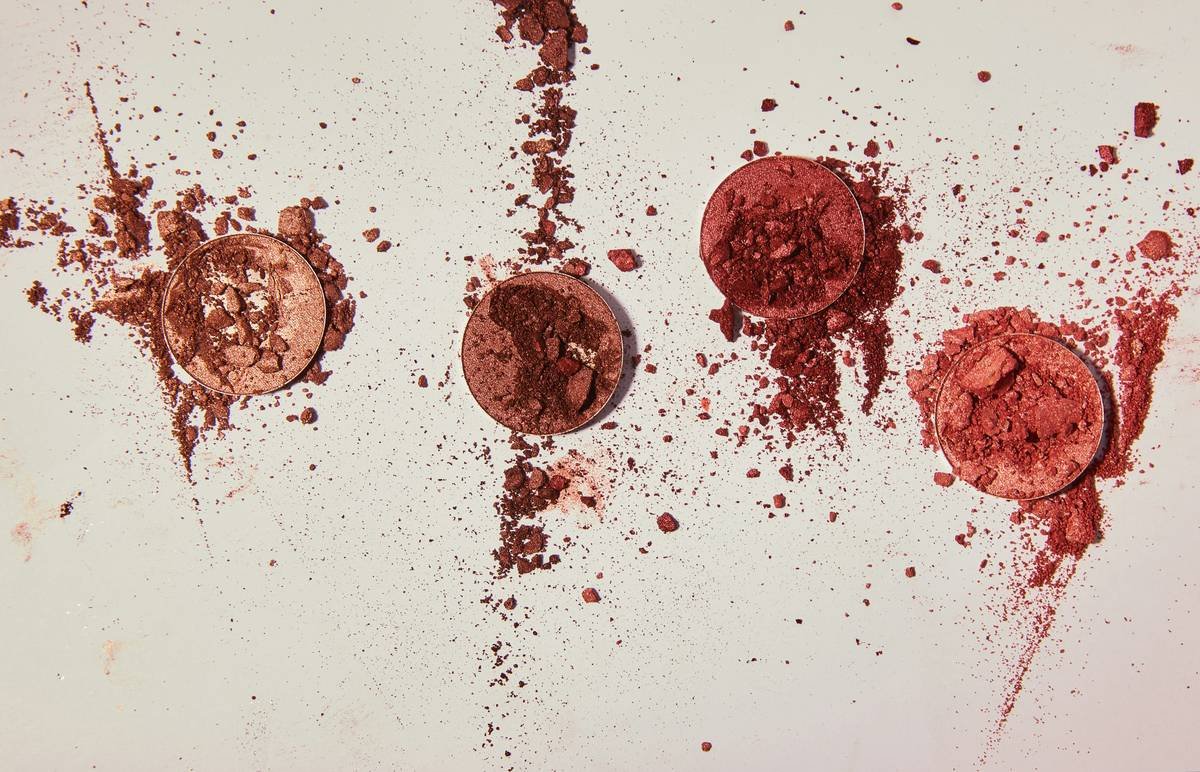
I learned this the hard way at a summer music festival. I used my favorite creamy gel liner and topped it with regular translucent powder—thinking I was “setting” it. By noon, my lower lash line looked like abstract art. A backstage artist handed me a tiny jar of Lancôme Anti-Smudge Fixing Powder, tapped it over my liner with a flat brush, and boom—survived eight hours of dancing, rain, and spicy ramen steam. No touch-ups. No shame.
How to Use Anti Smudge Powder Like a Pro
Using anti smudge powder isn’t about dumping half a container on your face. It’s precision work. Here’s my step-by-step method—tested on brides, performers, and even news anchors:
Step 1: Prep Skin with a Mattifying Primer
Start with an oil-free, silica-based primer (like Fenty Pro Filt’r) on oily zones—T-zone, under eyes, eyelids. This reduces sebum production at the source.
Step 2: Apply Waterproof Base Products First
Your liner, brow gel, and concealer must be waterproof or long-wear. Anti smudge powder enhances—but doesn’t replace—waterproof formulas.
Step 3: Press, Don’t Dust, the Powder
Optimist You: “Use a flat synthetic brush and press the powder onto high-risk areas—eyeliner wings, waterlines, brow tails!”
Grumpy You: “Ugh, fine—but only if I don’t have to buy another single-purpose brush.”
Actually… you can use your ring finger! Dab a pea-sized amount onto problem zones and gently press (don’t rub) for 10 seconds. This ensures maximum adhesion without disturbing the makeup underneath.
Step 4: Finish with a Mattifying Setting Spray
Spray at arm’s length with a product containing acrylates (like Urban Decay All Nighter). This seals everything into a single, cohesive layer.
Best Practices for Truly Smudge-Proof Makeup
Want foolproof results? Avoid these rookie mistakes—and adopt these insider habits:
- Don’t bake with anti smudge powder. Baking uses heat and time to set makeup—but anti smudge formulas work instantly via polymers. Over-application leads to patchiness.
- Refrigerate cream products. Cool liners and concealers slide less on warm skin.
- Blot before powdering. Use oil-absorbing sheets first—never layer powder over visible shine.
- Choose micronized powders. Particle size matters! Look for “micro-fine” or “air-milled” on labels—they blend invisibly.
- Refresh mid-day with a pressed version. Loose powders travel poorly. Keep a compact like Hourglass Veil Translucent Setting Powder (which doubles as anti smudge) in your bag.
⚠️ Terrible Tip Alert
“Just use baby powder!” Nope. Baby powder lacks polymers, contains talc (a potential irritant), and offers zero smudge resistance. Dermatologists at the American Academy of Dermatology warn against using non-cosmetic-grade powders on the face.
Rant Time: My Pet Peeve?
Brands calling every translucent powder “smudge-proof” just because it’s matte. Seriously? If it doesn’t list a film-forming polymer in the top five ingredients, it’s lying to you. Check those INCI lists, people!
Real-World Success Stories: When Anti Smudge Powder Saved the Day
Case Study 1: Miami Bride, July Wedding
Humidity: 92%. Temperature: 98°F. Tears shed: many. Yet her winged liner? Impeccable. Why? She used Charlotte Tilbury Airbrush Flawless Finish—a cult-favorite anti smudge powder—pressed over Stila Stay All Day Liquid Liner. Her MUAs reported zero touch-ups needed during 8 hours of photos, dancing, and open-bar margaritas.
Case Study 2: Broadway Performer, “Chicago” Tour
Stage lights hit 120°F. Sweat is inevitable. But thanks to a custom mix of Kryolan Ultra Setting Powder (anti smudge grade) and Mehron Paradise AQ liner, her bold eye look stayed sharp through two daily shows—verified by HD camera reviews from the lighting team.
These aren’t flukes. They’re proof that when you combine the right base + targeted anti smudge powder, sweat becomes just another accessory.
FAQs About Anti Smudge Powder
Is anti smudge powder the same as setting powder?
No. All anti smudge powders are setting powders, but not all setting powders are anti smudge. Look for terms like “transfer-resistant,” “long-wear lock,” or specific polymers in the ingredients.
Can I use it on my lips?
Not ideal. Lips need flexibility—anti smudge powders can crack. Instead, use a lip sealant or blot lipstick and reapply.
Does it work on hooded eyes?
Absolutely—and it’s essential! Hooded lids create friction. Press powder over your liner crease to prevent “creasing into smudging.”
Is it safe for sensitive eyes?
Most medical-grade anti smudge powders (like those from Clinique or Almay) are ophthalmologist-tested. Avoid fragranced versions if you’re prone to irritation.
How often should I reapply?
With proper application, once is enough—even in extreme conditions. Reapplication is only needed if you’ve heavily wiped the area.
Conclusion
Anti smudge powder isn’t magic—it’s smart cosmetic chemistry. By targeting high-friction, high-moisture zones with polymer-enhanced formulas, you can finally trust your makeup to stay put, whether you’re crying at a rom-com, hiking in monsoon season, or dancing till dawn. Remember: start with waterproof bases, press (don’t dust) your powder, and seal it all with a mattifying spray. Your future smudge-free self will thank you.
Now go forth—blink boldly, laugh loudly, and never fear a humid hug again.
Like a glitter tattoo from 2003, some things just shouldn’t budge.
Rain or shine,
My liner stays divine—
Anti smudge powder.